

If you are considering window tinting because you want a practical skill, the AI question is worth asking. Nobody wants to put time into learning something and discover that the work has disappeared. But asking whether AI can replace a tinter is a little like asking whether a calculator can run a business: which part of the job are we talking about?
A tinting job includes answering an enquiry, understanding the vehicle, preparing the glass, handling film, installing it, checking the result and looking after the customer. Software can change some of those tasks substantially. It does not follow that one app can deliver the whole service. The useful response is to learn where technology belongs in your workflow, while getting seriously good at the work customers pay you to finish.
Look at tasks, not the job title
The International Labour Organization's 2025 research on generative AI and jobs treats exposure at task level and finds that transformation is more likely than complete replacement for most exposed jobs. That is not a forecast specifically about window tinters. It is a useful way to think: a business can automate part of its office work without automating its physical service.
- Before installation: AI can help draft questions, organise notes and explain an approved product comparison in plain English.
- During preparation and installation: the operator handles the actual glass, film, tools, access and working conditions.
- After installation: software can organise records and draft care messages; someone still checks the work and takes responsibility when a customer raises a concern.
A convincing answer is not a finished window
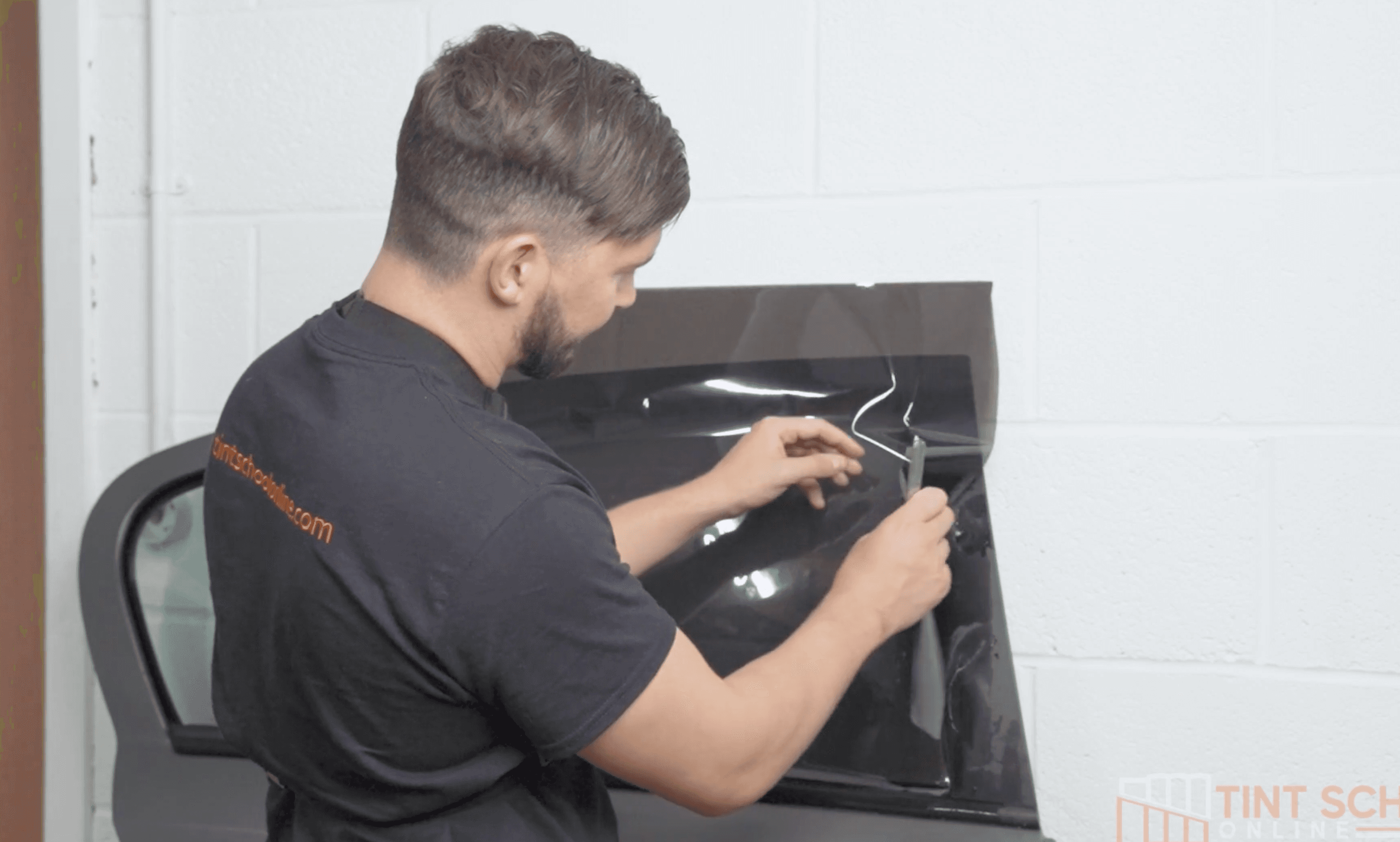
A customer does not buy your ability to describe a clean edge. They buy the finished edge, the appearance of the glass and the confidence that their vehicle has been treated properly. Two vehicles can bring different access problems, existing film, contamination or trim conditions. Recognising that difference and adjusting appropriately is part of the skill, not an inconvenience outside the job.
This is also why watching a perfect demonstration feels easier than repeating it. On a screen you can follow the explanation. At the glass you must coordinate the sequence, see a developing problem and decide whether to continue or start again. Practice turns those decisions into something more reliable than a hopeful first attempt.
Technology can still change the competition
It would be a mistake to turn that argument into an 'AI-proof forever' promise. Better software may help other operators reply faster, reduce administrative effort or present their work more clearly. Pattern-cutting systems already support a different part of the workflow: XPEL's DAP, for example, supplies vehicle-film patterns and cutting-related tools. That is useful assistance, not evidence that a customer receives an installation without an installer.
A skilled tinter who ignores enquiries for days can lose work to someone with a clearer service process. Equally, attractive automated messages cannot make a poor installation good. Treat workmanship and business systems as complementary. Read our AI, plotter and installation comparison if those different tools currently blur together.
Build the skill, then use the tools
- Learn a repeatable preparation and installation process. Keep photos and notes from practice so improvement is visible.
- Choose one modest AI task, such as rewriting an already-approved customer reply. Check the result before using it.
- Measure the whole outcome: fewer misunderstandings, a cleaner workflow and consistent finished work. Do not count generated paragraphs as progress.
The strong reason to learn tinting is not a prediction that technology will stand still. It is the chance to build a useful physical skill and learn how to deliver it professionally. Start with the course demonstrations and business training, then work through the practice roadmap. Let technology help you run the work; build the ability to do the work yourself.

