
You do not need thirty different ways to say 'book now'. A useful tint-shop content plan helps someone understand your work, compare options and decide what to ask next. AI is helpful when it organises real material into that sequence. It becomes unhelpful when it invents a busy shop, delighted customers or product results you cannot prove.
The example below uses three posts a week for four weeks. That is an editorial choice, not an algorithm rule or a promise of enquiries. If you only have enough good material for one post a week, publish one. A small, credible portfolio is more useful than a calendar filled with claims that do not belong to your business.
Build a small evidence folder first
- Your own photographs, with permission to use them and identifying details removed where appropriate.
- Questions customers actually ask, rewritten without their private details.
- Approved product information, care instructions and a clear description of your service.
- Available appointment information checked against your calendar before publication.
- Your actual contact or enquiry route, tested on a phone.
Give every image a short note: what it shows, what you did and what you must not claim. Label practice work as practice. Keep an installer demonstration distinct from a completed customer job. That makes it much easier to write useful captions without turning every image into an invented success story.
A four-week calendar you can adapt
Week 1: help people understand the service
- Monday — What a quote needs. Share a simple list of vehicle and glass details that helps you price accurately. Invite a relevant enquiry.
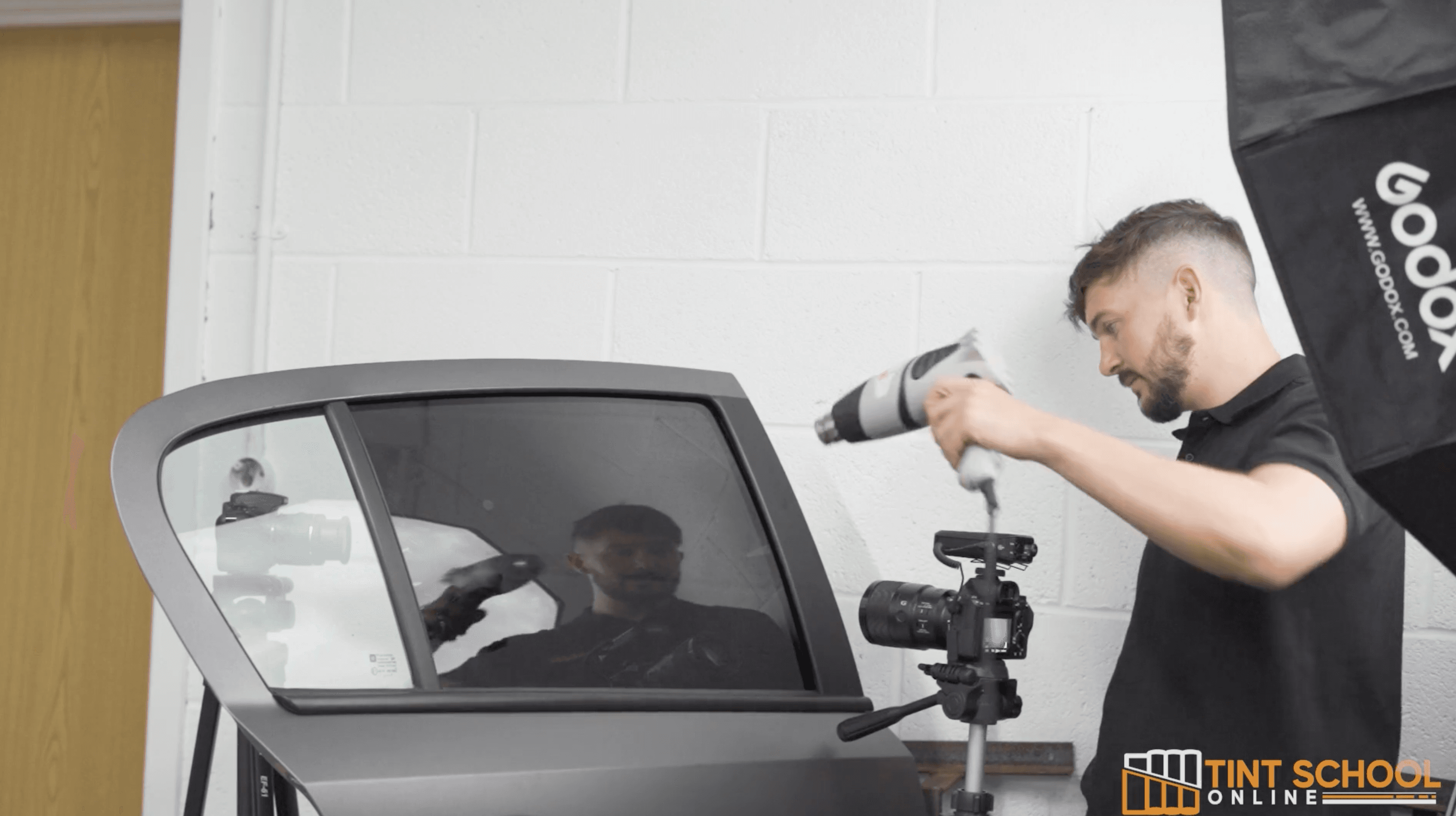
- Wednesday — A preparation detail. Use your own process photo to explain why setup belongs in the job, without presenting a still image as a complete tutorial.
- Friday — One finished-work example. Show the agreed scope and actual film used. Avoid unsupported heat, safety or legal claims.
Week 2: make the choices clearer
- Monday — A common product question. Explain one difference using the exact manufacturer's information for the products you offer.
- Wednesday — An edge-detail photograph. Show a close-up alongside a wider view so viewers understand where it sits on the vehicle.
- Friday — What happens at handover. Explain how you provide care instructions and where customers can raise a question.
Week 3: show how you work
- Monday — Behind the scenes. Show your actual workspace or mobile preparation, with no customer information visible.
- Wednesday — A frequently asked timing question. Explain what affects appointment planning without promising one duration for every vehicle.
- Friday — Another genuine job or practice comparison. Describe what changed and label the work accurately.
Week 4: make the next step easy
- Monday — Your scope checklist. Clarify which services you currently offer and what needs inspection first.
- Wednesday — An aftercare reminder drawn from the supplied product instructions. Do not invent a universal drying time.
- Friday — A straightforward invitation to enquire. Mention availability only after checking it, with no fabricated scarcity.

Ask AI to draft from the evidence
Review the whole month for repetition. If six captions begin with the same question and end with the same sales line, rewrite them. Match length to the material. A clear photo with two precise sentences does not need an essay attached.
Check claims, then learn from responses
The FTC's advertising guidance emphasises substantiation; an AI draft does not create evidence for a claim. Check text, image context and any linked page together before publishing. Never use a generated vehicle image as proof of an installation you performed.
At month's end, note which posts produced useful questions and which confused people. Likes are not bookings, and a booking is not profit. Keep the subjects that help customers make better decisions. Use the portfolio guide to improve your raw material and the reply examples to handle the conversations your content starts.

